March 12, 2026
Key Takeaways
- Dormant Timing: March is the “Goldilocks” zone for pruning in Wisconsin before the sap flows and buds break.
- Winter Debris: Clearing fallen limbs and leaf litter prevents fungal growth and pest nesting near the trunk.
- Mulch Management: Proper “donut” mulching protects roots from the erratic freeze-thaw cycles of a Racine spring.
- Structural Inspection: Identifying winter-induced cracks now prevents catastrophic failure during spring gales.
- Professional Expertise: Utilizing ISA Certified Arborists ensures pruning is done for long-term health, not just aesthetics.
As the snow finally recedes from the lakefronts of Kenosha and the rolling fields of Racine County, the trees of Southeast Wisconsin are beginning their annual awakening. While March often feels like a tug-of-war between the tail end of winter and the first whispers of spring, it is actually the most critical month for proactive tree care. For homeowners in the Racine and Kenosha area, WI, taking action now ensures that your oaks, maples, and evergreens enter the growing season with maximum vitality and structural integrity.
In Wisconsin, our trees face unique stressors from the heavy salt spray of winter roads to the erratic “freeze-thaw” cycles of early spring. Neglecting your landscape in March can lead to stunted growth, increased pest vulnerability, or structural failure during the inevitable spring thunderstorms. Here are the five essential tasks every Racine County homeowner should prioritize this month to ensure a healthy, vibrant canopy.
1. Perform Last-Minute Dormant Pruning
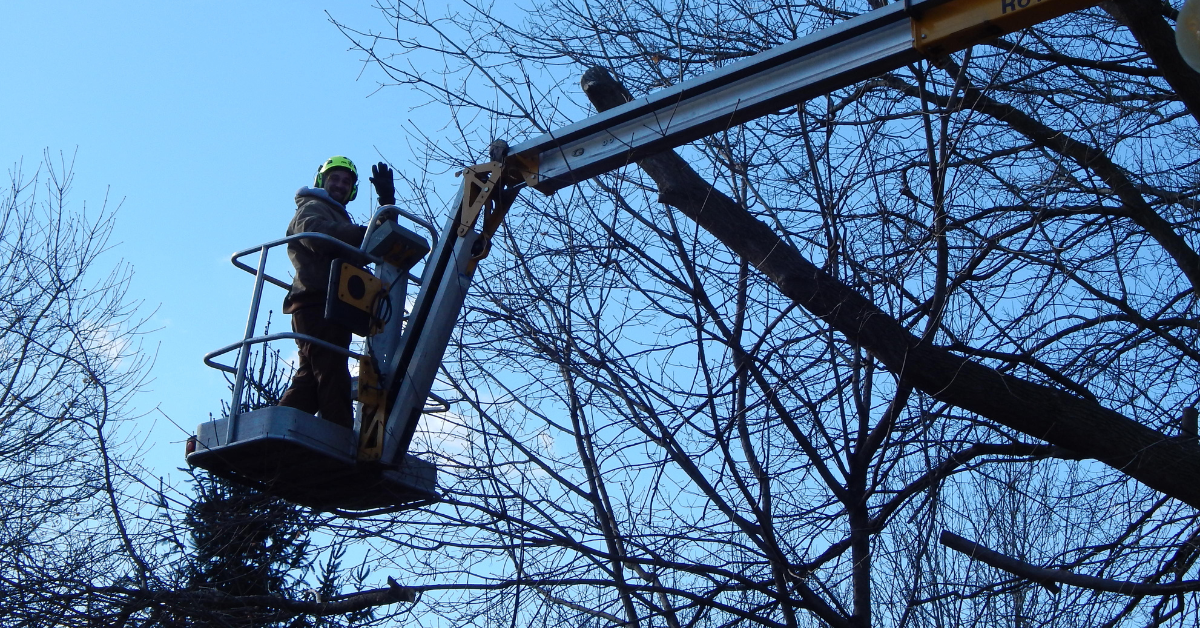
March is the final window for “dormant pruning.” This is the practice of trimming trees while they are still inactive. Because the leaves are absent, the tree’s architecture is fully visible, making it significantly easier for an arborist to identify crossing branches, deadwood, or “codominant stems” (two trunks competing for space that may eventually split).
Pruning now is biologically superior because the wounds are only exposed for a short window before the spring growth surge begins, allowing the tree to “seal” the cuts quickly. Furthermore, many common pests and diseases, such as the devastating Oak Wilt, are inactive in the cold. Once temperatures consistently stay above 50°F, pruning certain species becomes much riskier. Professional trimming now helps direct the tree’s energy toward healthy, desired growth rather than wasting resources on damaged limbs.
2. Inspect for Winter Damage and “Sunscald”
The harsh Wisconsin winter can leave lasting scars that aren’t always visible from a distance. March is the time to perform a “walk-around” inspection of your property. Look specifically for “sunscald“, elongated, sunken, or cracked patches of bark on the south or southwest side of the tree. This happens when the warm winter sun “wakes up” the cells under the bark during the day, which then freeze rapidly when the sun sets, causing the tissue to die.
Additionally, check for “salt burn” if your trees are near Highway 20, I-94, or other major salted routes in Racine County. Heavy salt runoff can dehydrate roots and kill evergreen needles. If you notice a white crust on the soil or browning needles on the side facing the road, a heavy “flushing” of the soil with fresh water once the ground thaws can help dilute the salinity and save the root system.
3. Clear Debris and Inspect the Root Flare
As the snow melts, it often reveals a graveyard of fallen twigs, matted leaves, and winter trash. This debris isn’t just an eyesore; it’s a habitat for fungi and pests. Clearing the area around the base of your trees allows the soil to breathe and warm up more efficiently as the sun gains strength.
Pay special attention to the root flare, the area where the trunk expands at the base before entering the ground. If soil or mulch has built up against the bark over the winter, it traps moisture against the trunk, which leads to rot or “stem girdling roots.” Use a hand trowel to gently expose the flare if it has been buried, ensuring the tree isn’t being “choked” at its most vital junction.
4. Apply Fresh, Proper Mulch
Mulching is one of the best things you can do for a tree, provided it is done correctly. In Racine County, our soil temperatures can fluctuate wildly in March. A 2-to-3-inch layer of organic wood chips acts as a critical insulator, keeping the roots at a consistent temperature and retaining moisture for the upcoming growth spurt.
However, the “mulch volcano” remains a common and deadly mistake. Never pile mulch directly against the bark. Instead, create a “donut” shape, leaving a few inches of bare space between the mulch and the tree trunk. This prevents bark decay and keeps rodents from nesting against the tree and chewing on the base during the last cold snaps of the season.
5. Schedule a Structural Safety Audit
Spring in Southeast Wisconsin is notorious for high winds and heavy, wet snow. A tree that looks fine in the winter stillness may have internal rot or structural cracks that will cause it to fail once it is heavy with new leaves and caught in a 50-mph gust. March is the perfect time for a professional arborist to assess the “weight distribution” of your trees.
Often, “canopy lifting,” the removal of lower, heavy branches, can reduce the “wind sail” effect and prevent a tree from uprooting during a spring gale. Identifying these hazards now is far safer and more cost-effective than dealing with emergency storm damage in April or May.
Keep Your Property Safe with Tree Frog Service LLC
When it comes to the specialized needs of Racine and Kenosha County landscapes, Tree Frog Service LLC is the region’s trusted authority. Led by multiple ISA Certified Arborists (WI-1269A, WI-1385A, WI-1428A), we offer everything from precision tree trimming and canopy lifting to expert removal and stump grinding. Whether you need emergency storm-damage cleanup or a complimentary consultation to plan your spring growth, our fully insured team delivers quality work at reasonable prices. We take pride in our “tree care excellence,” ensuring your property remains beautiful and safe all year long.
Frequently Asked Questions
Is March too late to prune my trees in Wisconsin?
No, it is generally the best time. As long as the buds haven’t fully opened, the tree is still dormant and will recover quickly.
What are the benefits of canopy lifting?
It provides clearance for sidewalks and roofs while allowing more sunlight to reach your lawn, promoting better grass growth.
Why should I hire a Certified Arborist?
Certification ensures the professional has the biological knowledge to prune for health, not just aesthetics, preventing long-term damage.
How do I know if my tree has winter sunscald?
Look for bark that is peeling, cracked, or appears “burnt,” specifically on the side of the tree that gets the most afternoon sun.
Can mulch really kill my tree?
If piled against the trunk (a “volcano”), it traps moisture that rots the bark and creates an entry point for insects and disease.
Do I need to water my trees in March?
If the ground has thawed and we have had a dry winter, a deep watering can help the tree break dormancy successfully.
Summary Checklist: Spring Tree Care
| Condition | Risk Level | Recommended Action |
| Sudden Leaning | Critical | Call for emergency assessment immediately |
| Large Trunk Cracks | High | Schedule a professional inspection right away |
| Mushrooms or Fungus at the Base | Moderate to High | Inspect for internal decay and structural weakness |
| Dead or Bare Branches | Varies | Consult an arborist to determine if pruning or removal is needed |
| Overhanging Power Lines | High | Contact a licensed tree service for safe clearance |
Final Advice
In Wisconsin, spring is not just a season of growth; it is a season of extreme mechanical stress. As trees “leaf out,” they gain significant weight and wind resistance just as our saturated spring soils become the least stable. If you notice heaving soil, new leans, or bark separations during the March thaw, your tree is likely communicating a structural failure that gravity will eventually finalize. Proactive intervention by a certified expert can often stabilize a tree through weight-reduction pruning, but waiting until a storm hits turns a manageable maintenance task into an expensive emergency. For the highest level of property safety and tree health in the Kenosha and Racine area, trust the experts at Tree Frog Service LLC.
Reviewed by a Certified Arborist
This horticultural analysis has been reviewed to ensure all information regarding tree biology and storm safety meets industry standards.
Author Bio: Tree Frog Service LLC Editorial Team
The team at Tree Frog Service LLC has over a decade of experience managing property safety and tree health in Kenosha and Racine County, WI. We specialize in hazard mitigation, tree removal, and expert arborist services for both residential and commercial clients.